Imagine a delivery courier in a major city, logging onto three different apps simultaneously to maximize earnings. She has no health insurance, no paid leave, no pension contribution, and no right to join a union that could negotiate her base pay. When the platform unilaterally cuts her per-delivery rate by 15%, her only recourse is to switch to a competitor app — which will likely cut its own rates within weeks. This is not a hypothetical scenario. It is the daily reality for millions of gig workers worldwide in 2026, and the legal framework that governs their employment status remains fundamentally broken.
The core problem is deceptively simple: platforms classify their workers as independent contractors rather than employees. This single legal designation strips workers of nearly every protection that labor movements spent over a century building — collective bargaining rights, unemployment insurance, minimum wage guarantees, and workplace safety regulations. In 2026, as AI-driven dispatch systems grow more sophisticated at optimizing routes and suppressing wages, the gap between platform profitability and worker precarity has widened into a chasm.
Stakeholders and Value Tensions
At least four distinct stakeholder groups are caught in this classification battle, each with fundamentally incompatible interests.
Gig workers — the couriers, drivers, cleaners, and freelance programmers — bear the direct cost of misclassification. They absorb the financial risk of equipment, vehicle maintenance, and downtime. They lack access to employer-sponsored healthcare in most jurisdictions, and they cannot collectively refuse rate cuts because antitrust law often treats independent contractors as competing businesses, making coordination illegal. Their core value claim is dignity and economic security — the right to a stable livelihood and a voice in their working conditions.
Platform companies — from ride-hailing giants to food delivery networks — argue that flexibility is the defining feature of gig work. Their position rests on operational freedom and innovation: if forced to classify workers as employees, they claim, the business model that enables on-demand service would collapse, prices would rise, and consumers would lose convenience. They have invested billions in lobbying and ballot initiatives to preserve the contractor classification.
Governments and regulators face a structural tension between fiscal revenue and social welfare. Misclassified workers generate less tax revenue (no payroll taxes, no employer contributions) but often require more public assistance (healthcare subsidies, housing support). Tax complexity further disadvantages gig workers: they must navigate self-employment tax obligations, quarterly estimated payments, and deductible expenses that traditional employees never face — creating both compliance risks and financial penalties for errors.
Consumers represent the often-invisible fourth stakeholder. Cheap rides and fast delivery depend on labor costs that externalize worker welfare onto the public system. The value tension here is affordability versus ethical consumption — most users want low prices but would recoil at explicitly endorsing exploitative labor conditions.
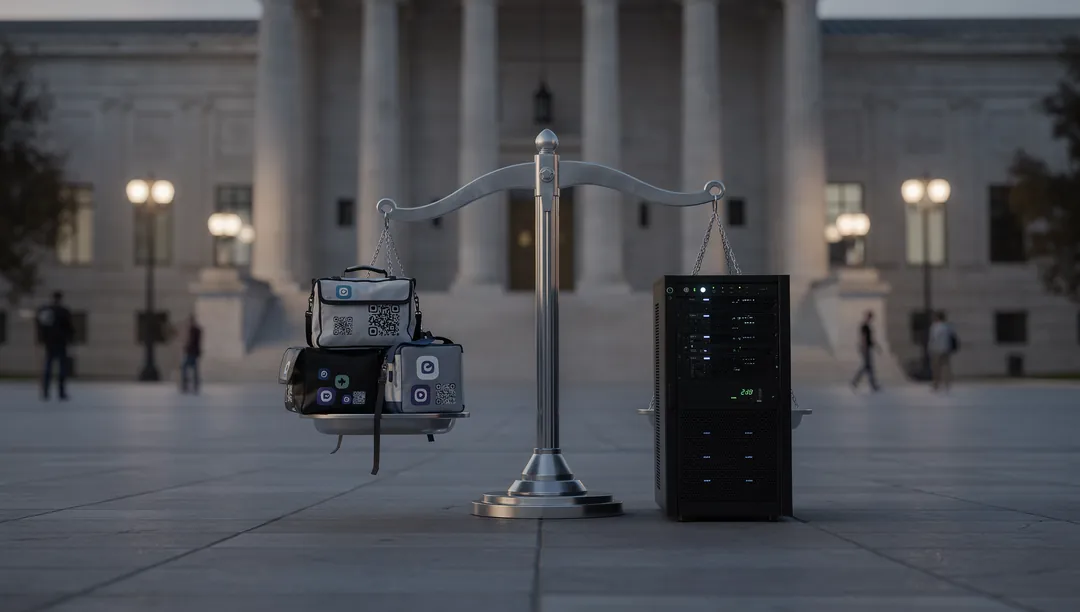
The fundamental conflict crystallizes as flexibility versus security. Platforms insist these are mutually exclusive; workers increasingly argue they are not.
Mechanism Analysis: Why This Problem Persists
The classification trap persists because of three reinforcing mechanisms: legal architecture, economic incentives, and technological mediation.
First, labor law in most jurisdictions was designed for an industrial economy with clear employer-employee relationships. The binary classification — you are either an employee or an independent contractor — cannot accommodate hybrid arrangements where a platform controls scheduling, pricing, and task assignment while disclaiming any employment relationship. California attempted to address this with AB5 (2019), which adopted the "ABC test" requiring companies to prove workers are free from control, performing work outside the company's usual business, and customarily engaged in independent trade. But the industry responded with Proposition 22 (2020), a ballot measure that spent over $200 million to exempt app-based drivers from employee classification — and won. This established a dangerous precedent: if you have enough capital, you can rewrite labor law by direct democracy.
The EU Platform Work Directive, adopted in 2024, took a different approach by establishing a legal presumption of employment for platform workers, shifting the burden of proof onto platforms. This represents the most significant structural intervention to date, though implementation across member states remains uneven in 2026.
Second, the economic incentive structure rewards classification avoidance. Payroll taxes, unemployment insurance, workers' compensation, and paid leave can add 20–30% to labor costs. Platforms operating on razor-thin margins — many still unprofitable after a decade — have an existential incentive to maintain contractor status. This is not merely greed; it is a structural feature of a business model that depends on labor cost flexibility to survive demand fluctuations.
Third, AI dispatch systems have introduced a new layer of control that paradoxically strengthens the case for employment classification while making it harder to achieve. Algorithms determine which workers receive assignments, what routes they take, and effectively what they earn — the kind of control traditionally associated with employment. Yet this control is mediated through opaque algorithmic systems that platforms characterize as mere "matching services," creating a legal gray zone that existing frameworks cannot penetrate.
Position and Recommendation
I take the position that the binary classification system is obsolete and must be replaced. The argument that flexibility requires contractor status is a false dichotomy — several European jurisdictions have demonstrated that employment protections and scheduling flexibility can coexist through sectoral bargaining and portable benefits systems.
The most persuasive path forward is a third legal category — "dependent contractor" or "platform worker" — that grants collective bargaining rights, minimum pay guarantees, and portable benefits while preserving scheduling flexibility. This is not theoretical; Spain's 2021 "Rider Law" created exactly such a category for delivery couriers, reclassifying them as employees of the platforms while allowing operational flexibility.
Concrete recommendation: National legislatures should mandate a rebuttable presumption of employment for platform workers, modeled on the EU directive, combined with portable benefit accounts funded by a per-transaction platform contribution. This would ensure that workers accumulate healthcare, retirement, and paid-leave benefits regardless of how many platforms they work for, while preserving the multi-app flexibility that defines gig work. The presumption should be rebuttable only if platforms can demonstrate genuine worker autonomy — control over pricing, scheduling, and client selection — meeting a rigorous ABC-style test.
Key Takeaways
- Classification determines everything: The employee-versus-contractor binary is the single legal decision that governs whether gig workers can unionize, receive benefits, or challenge platform decisions. - Flexibility and security are not mutually exclusive: Evidence from EU jurisdictions and Spain's Rider Law demonstrates that employment protections can coexist with scheduling autonomy. - AI deepens the paradox: Algorithmic dispatch systems exercise employer-like control while platforms claim they merely provide matching services — a contradiction that current law cannot resolve. - The tax system punishes misclassified workers: Self-employment tax obligations, quarterly filing requirements, and expense documentation create compliance risks and financial disadvantages that traditional employees never face. - Collective bargaining is the missing right: Without employee status, gig workers cannot legally organize, leaving them powerless against unilateral rate cuts and algorithmic repricing. - Regulatory momentum is building but uneven: The EU Platform Work Directive and California's AB5 represent competing models; 2026 is a pivotal year for determining which approach becomes the global default.
Conclusion
The gig economy was built on a legal fiction — that millions of workers whose every move is dictated by an algorithm are somehow independent entrepreneurs. In 2026, that fiction is unraveling under the weight of its own contradictions. Workers cannot organize, platforms cannot profitably classify them as employees, and governments cannot afford to subsidize the social safety net that employers have abandoned. A third category — one that preserves flexibility while restoring fundamental labor rights — is not a compromise. It is a necessity. The question is no longer whether the classification system will change, but whether it will change through legislation or through the slow accumulation of lawsuits, strikes, and public outrage. The algorithms that manage gig work are remarkably efficient at optimization. The legal frameworks that govern it are remarkably inefficient at justice. That asymmetry cannot hold indefinitely.
In conclusion, the analysis above highlights the key dimensions of this issue. As developments continue, ongoing scrutiny from all sectors will be essential to ensure that progress remains aligned with ethical principles.