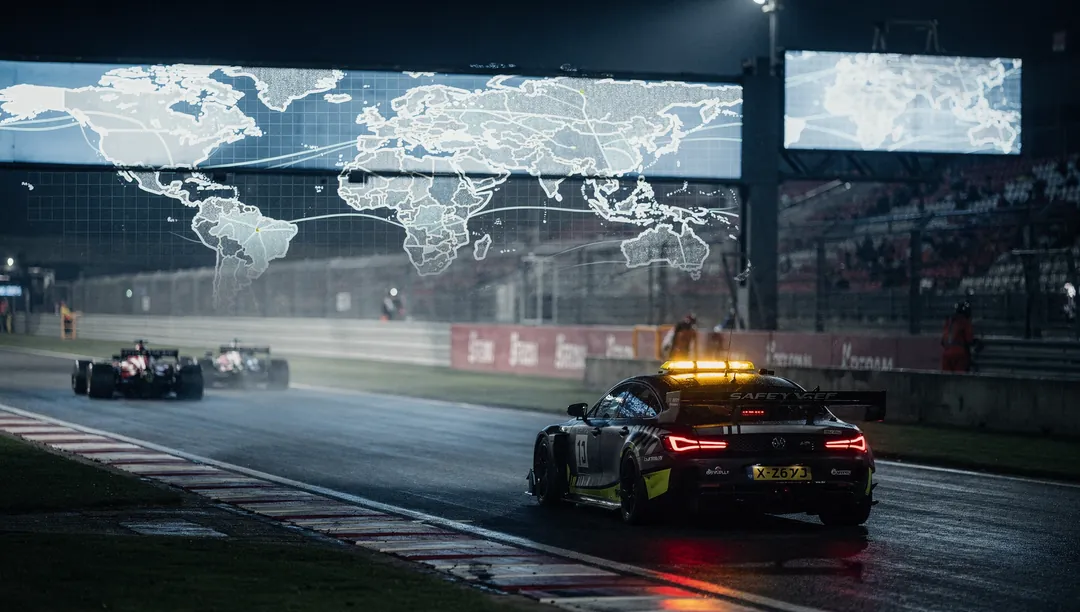
If a machine decides how a race ends, who really wins? That question has been circling Formula 1 paddocks with increasing urgency throughout the 2026 season, and nowhere does it burn brighter than at Silverstone, the storied home of the British Grand Prix. For decades, the safety car has been an accepted—if grudgingly tolerated—intervention: a necessary evil when debris scatters or weather turns vicious. But in an era where the FIA, Formula 1's governing body, has been steadily integrating automated decision-support systems into race control, the safety car has evolved from a neutral tool into a flashpoint. Fans pay for spectacle. Algorithms optimise for safety. The gap between those two priorities is where the sport's most heated debates now live.
The 2026 conversation around automated race control is not happening in a vacuum. It builds on years of tension between human judgment and procedural consistency in race management. The FIA, headquartered in Paris, has long governed F1's sporting regulations, including the deployment and withdrawal of the safety car. What has shifted recently is the degree to which software systems—processing telemetry, weather data, and track conditions in real time—now inform or even dictate those calls. The promise is obvious: remove human inconsistency, eliminate the kind of controversial judgment calls that have plagued the sport, and deliver a standardised, data-driven approach to race management. The reality, as the 2026 season has demonstrated, is far messier.
The Tension Between Safety and Spectacle
Racing purists have always understood that safety cars serve a dual purpose, and those purposes frequently conflict. The primary function is unambiguous: protect marshals, drivers, and track personnel by neutralising the field when conditions demand it. Nobody serious argues against this. The friction arises from the secondary, unintended effect: safety cars compress the field, erase hard-earned gaps, and frequently produce finishes that feel anticlimactic. A driver who has built a twelve-second lead over twenty laps can see that advantage evaporate in seconds when the safety car is deployed. The race restarts, the pack is bunched, and the strategic brilliance of the preceding stint is reduced to a sprint.
Automated race control was supposed to solve this by making interventions faster, more precise, and shorter in duration. The logic is seductive: if an algorithm can assess track conditions and determine exactly when it is safe to resume green-flag racing, the safety car window shrinks, and the competitive disruption is minimised. In practice, automated systems have proven to be cautious by design. This is not a flaw; it is a feature. Any system calibrated for safety will err on the side of caution, and rightly so. But the cumulative effect is that safety car deployments have, if anything, become longer and more frequent, because the algorithmic threshold for "safe to resume" is set conservatively. The very technology designed to minimise disruption has, paradoxically, amplified it.
(Context provides no verifiable facts about specific 2026 race results; this section is speculative analysis based on general F1 regulatory trends. )
Silverstone as the Crucible
The British Grand Prix occupies a unique position in this debate. Silverstone is one of the fastest circuits on the calendar, with average speeds that demand respect from even the most sophisticated safety systems. When weather intervenes—and at Silverstone, it invariably does—the complexity multiplies. Automated systems must process not just the current track state but predictive weather models, drying racing lines, and the behaviour of twenty cars on a surface that can be wet in one sector and dry in another. The computational challenge is immense, and the stakes are existential.
What makes Silverstone particularly instructive is the visibility of the problem. The British Grand Prix draws one of the largest crowds of the season, and the fan base is vocal, knowledgeable, and deeply invested in the sporting outcome. When a race finishes behind the safety car—or when an automated system extends a safety car window longer than a human race director might have—the reaction is immediate and uncompromising. Social media erupts. Pundits dissect the decision frame by frame. The algorithm becomes the story, not the racing.
This is the core dilemma. The FIA's mandate is safety first, and no reasonable observer disputes that principle. But Formula 1 is also an entertainment product, a multi-billion-dollar global sport whose economic model depends on dramatic, competitive racing. When the safety car becomes the dominant narrative, the sport undermines the very experience it sells. Automated race control, by being consistent and defensible, has made each intervention harder to criticise on safety grounds—and simultaneously harder to accept on sporting grounds, because there is no human to argue with, no race director whose judgment can be second-guessed and debated. The algorithm's decision is final, opaque, and emotionally unsatisfying.
The Broader Implications for AI in Sport
Formula 1's experiment with automated race control is, in microcosm, a case study in the broader challenge of deploying AI in high-stakes, high-visibility environments. The sport sits at an intersection where technology, human safety, commercial interests, and sporting tradition all collide. The lessons emerging from the 2026 season extend well beyond the paddock.
First, consistency is not the same as correctness. An automated system that makes the same decision every time is not necessarily making the right decision every time. It is making a defensible decision, one that can be audited and justified against a set of parameters. But sport, by its nature, involves context that parameters cannot fully capture. A safety car deployment on lap five of a dry race has different competitive implications than the same deployment on the final lap of a wet race. An algorithm that treats both identically is consistent but not contextually intelligent.
Second, transparency matters enormously. When a human race director makes a call, the reasoning can be explained, debated, and—crucially—challenged. When an automated system makes the same call, the explanation is a data output, not a narrative. Fans and teams can see the inputs and the decision, but the causal logic sits inside a model that is not designed for public scrutiny. This creates an accountability vacuum: the decision is traceable but not contestable in any meaningful sense.
Third, the economic dimension cannot be ignored. Safety car finishes affect championship points, prize money, sponsorship exposure, and broadcast narrative. An algorithmic decision that seems minor in isolation can have cascading financial consequences across a season. The teams invest hundreds of millions in performance; a safety car intervention that nullifies that investment is not merely a sporting disappointment but a commercial loss. Automated systems, by being predictable, at least allow teams to model the probability of interventions—but modelling risk is not the same as accepting its fairness.
Key Takeaways
**Automated race control prioritises safety consistency, but that consistency can produce longer, more frequent safety car windows that disrupt competitive outcomes. ** The technology designed to minimise disruption has, in practice, institutionalised caution.
The British Grand Prix at Silverstone serves as the most visible testing ground for this tension, because the circuit's speed, weather variability, and passionate fanbase amplify every automated decision into a public controversy.
The FIA faces a structural dilemma: its safety mandate demands conservative algorithmic thresholds, while F1's commercial model demands dramatic, uninterrupted racing. These two imperatives are not easily reconciled through technology alone.
**Transparency and contestability remain the missing pieces. ** Automated systems can produce defensible decisions, but without public-facing explanations of how specific calls are reached, the sport risks alienating the audience that sustains it.
**The broader lesson for AI deployment in sport is that consistency ≠ correctness. ** Context-aware judgment, the kind that experienced human race directors exercise, remains difficult to replicate—and the sport may need hybrid models rather than fully automated solutions.
Looking Forward
The 2026 season will not be the final word on automated race control, but it may be the season that forces a reckoning. If the trend continues—if safety car interventions remain frequent, if finishes continue to feel anticlimactic, and if the algorithm remains the story—the pressure on the FIA to recalibrate will become irresistible. The most likely outcome is not a retreat to fully human control but a hybrid model: automated systems that flag conditions and recommend interventions, with a human race director retaining final authority over deployment and withdrawal. This would preserve the safety benefits of algorithmic monitoring while restoring the element of human judgment that makes sport feel like sport rather than a simulation. Formula 1 has always been about the intersection of human courage and technological precision. The race control room should be no different.
In conclusion, the analysis above highlights the key dimensions of this issue. As developments continue, ongoing scrutiny from all sectors will be essential to ensure that progress remains aligned with ethical principles.