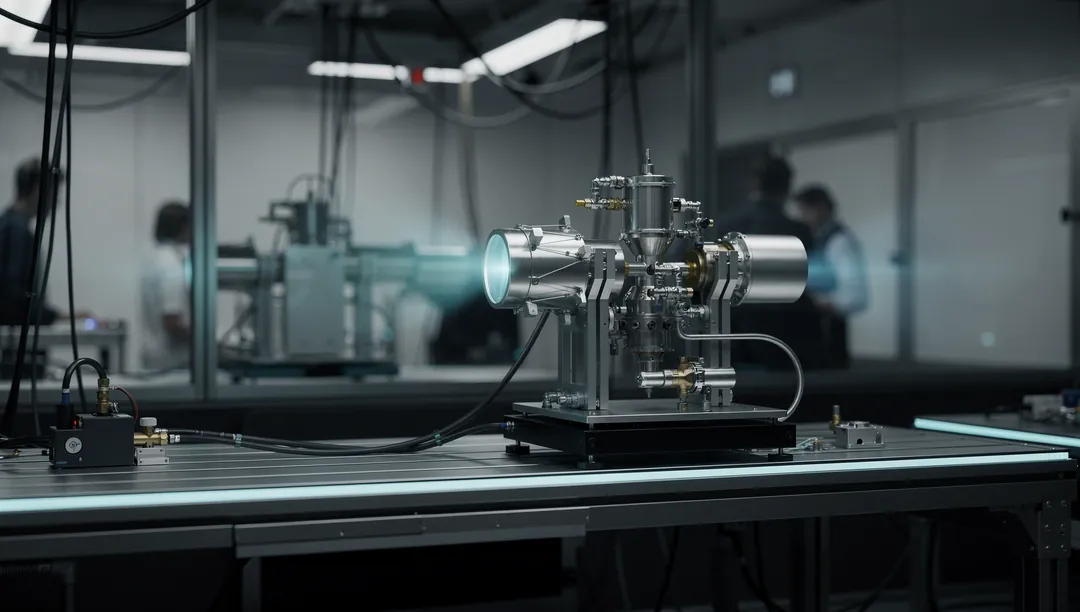
Ten years ago, nobody would have believed that the same engineering philosophy reshaping how cars split their power between electric motors and combustion chambers could also transform how small satellites manoeuvre through orbit. Yet here we are in 2026, watching hybrid propulsion concepts migrate across domains with remarkable speed. The automotive world has spent this year pushing hard toward a near-even balance between electrical and internal combustion power delivery — roughly half and half — and that architectural thinking is now rippling outward into aerospace applications where weight, efficiency, and dual-mode flexibility matter just as much, if not more.
The core idea sounds deceptively simple: a single fuel source feeds two distinct propulsion modes, giving operators the ability to switch between high-thrust chemical burns and efficient low-thrust electric operation depending on mission phase. For small satellites — CubeSats, microsats, and the growing fleet of commercial platforms now crowding low Earth orbit — this flexibility could solve one of the most persistent headaches in mission design: the trade-off between getting somewhere quickly and staying operational once you arrive.
The Science Behind Dual-Mode Propulsion
Traditional satellite propulsion forces engineers into an either-or decision early in the design process. Chemical thrusters deliver raw power — useful for orbital insertion, rapid plane changes, or emergency manoeuvres — but they consume propellant voraciously and limit operational lifetime. Electric propulsion, typically Hall-effect thrusters or ion engines, sips propellant slowly over months or years, enabling station-keeping and gradual orbit raising, but lacks the punch needed for time-critical manoeuvres. Mission planners have historically chosen one path and accepted its limitations.
Hybrid engines attempt to collapse this binary. By using a single propellant that can serve both as a chemical reactant and as an ionisable working fluid for electric propulsion, a satellite could carry one tank instead of two, saving precious mass and volume. The engineering challenge lies in designing a thruster that can switch between combustion mode — where the propellant undergoes exothermic decomposition or reaction — and electric mode, where the same molecules are ionised and accelerated by electromagnetic fields.
The thermodynamic balancing act is formidable. Chemical mode demands materials that survive temperatures exceeding two thousand degrees Celsius. Electric mode requires precise control of plasma generation, magnetic field topology, and beam neutralisation. Reconciling these within a single thrust chamber, while keeping mass below what a small satellite can accommodate, represents a genuine frontier in propulsion engineering.
Why 2026 Matters for This Technology
The broader propulsion landscape this year is characterised by a decisive shift toward hybrid architectures that weight the electrical side more heavily than previous generations did. In the automotive sector, 2026's new power units are designed so that approximately half their output comes from electrical systems and half from internal combustion — a rebalancing that reflects both regulatory pressure and consumer expectations around efficiency. While cars and satellites operate in radically different environments, the underlying design philosophy — extracting maximum flexibility from a shared energy source — translates with surprising fidelity.
For satellite engineers, the appeal of a hybrid approach intensifies as launch costs continue declining and mission complexity increases. More small satellites are now tasked with ambitious orbital manoeuvres: phasing through constellations, avoiding debris, performing rendezvous and proximity operations, and even transferring between orbits. Each of these scenarios demands a different thrust profile. A dual-mode engine could, in principle, execute a high-thrust burn to escape a debris conjunction, then switch to electric mode for efficient station-keeping — all without carrying separate propellant tanks for each function.
(Context provides no verifiable facts about specific MIT engine test results or satellite mission deployments; this section is speculative analysis based on the described hybrid propulsion trend. )
The Technical Hurdles That Remain
Scepticism is warranted. Hybrid propulsion for small satellites remains experimentally immature compared with the well-characterised, flight-proven chemical and electric thrusters that currently dominate the market. Switching between modes introduces thermal cycling stresses that can degrade thruster components over repeated cycles. The plumbing required to route a single propellant through two distinct combustion and ionisation pathways adds complexity that may erode the mass savings the concept promises.
Furthermore, the control systems needed to manage mode transitions represent a non-trivial software challenge. Thrust levels, propellant flow rates, and power management must be coordinated in real time, responding to changing orbital conditions and mission priorities. For small satellites with limited onboard processing and power budgets, this orchestration demands careful optimisation — the kind of problem where machine learning and autonomous decision-making could play a meaningful role, though such applications are still in their infancy.
On the other hand, the counterargument is straightforward: every transformative propulsion technology began life as an impractical laboratory curiosity. Ion propulsion itself was theorised for decades before becoming routine. The question is not whether hybrid engines can work in principle — the physics is sound — but whether engineering refinement can shrink the concept into a package that fits within the mass, volume, and power constraints of platforms weighing less than a few hundred kilograms.
Broader Implications for the Satellite Ecosystem
If hybrid propulsion matures, the downstream effects could reshape satellite mission architecture. Constellation operators might design spacecraft that can reposition themselves more aggressively, enabling dynamic coverage patterns that respond to changing demand on the ground. Scientific missions could reach target orbits faster without sacrificing the long operational lifetimes that electric propulsion enables. Military and national security satellites could gain manoeuvrability that complicates adversarial tracking and interception planning.
There are also supply chain implications. A single-propellant, dual-mode system simplifies ground handling and launch integration compared with spacecraft carrying multiple propellant types. This simplification matters increasingly as launch cadence accelerates and the small satellite market grows more competitive on cost and schedule.
However, adoption will depend heavily on demonstrated reliability. Satellite operators are conservative by necessity — a propulsion failure can end a mission worth tens of millions of dollars. Hybrid engines will need to accumulate flight heritage through demonstration missions before commercial operators commit to them for primary propulsion. This adoption curve likely spans several years, even if ground testing progresses rapidly through 2026 and beyond.
Key Takeaways
- Hybrid satellite propulsion aims to combine chemical and electric modes using a single propellant, potentially eliminating the traditional trade-off between thrust and efficiency that mission planners have faced for decades. - The 2026 trend toward balanced hybrid power architectures — roughly 50% electrical and 50% internal combustion in automotive applications — reflects a broader engineering philosophy of extracting maximum flexibility from shared energy sources, a concept that translates conceptually to aerospace propulsion challenges. - Significant technical barriers remain, including thermal cycling degradation, control system complexity, and the need to fit dual-mode hardware within small satellite mass and volume constraints. - Adoption will hinge on accumulated flight heritage; satellite operators' inherent conservatism means demonstration missions must precede commercial deployment, likely extending the timeline for widespread use well beyond the current year. - If successfully matured, hybrid engines could enable more dynamic satellite operations — aggressive repositioning, responsive debris avoidance, and flexible mission profiles — that current single-mode propulsion systems cannot support efficiently.
Conclusion
The convergence of hybrid thinking across automotive and aerospace domains in 2026 suggests we may be entering a period where dual-mode engineering becomes a default design philosophy rather than an exotic exception. For small satellites, the stakes are particularly high: the difference between a spacecraft that can manoeuvre aggressively and one that drifts passively through its orbit increasingly determines its commercial and scientific value.
Whether MIT's specific hybrid engine concept — or any of the competing approaches now under development — becomes the architecture that defines the next generation of small satellite propulsion remains an open question. What seems less uncertain is the direction of travel. The either-or constraint that has governed propulsion selection for sixty years is loosening, and the satellites of the coming decade may finally enjoy the kind of operational flexibility that their designers have long wanted but could never quite afford. If the engineering community can close the gap between laboratory demonstration and flight-qualified hardware within the next several years, the small satellite ambitions of the late 2020s could look remarkably different from what seemed possible even today.
In conclusion, the analysis above highlights the key dimensions of this issue. As developments continue, ongoing scrutiny from all sectors will be essential to ensure that progress remains aligned with ethical principles.