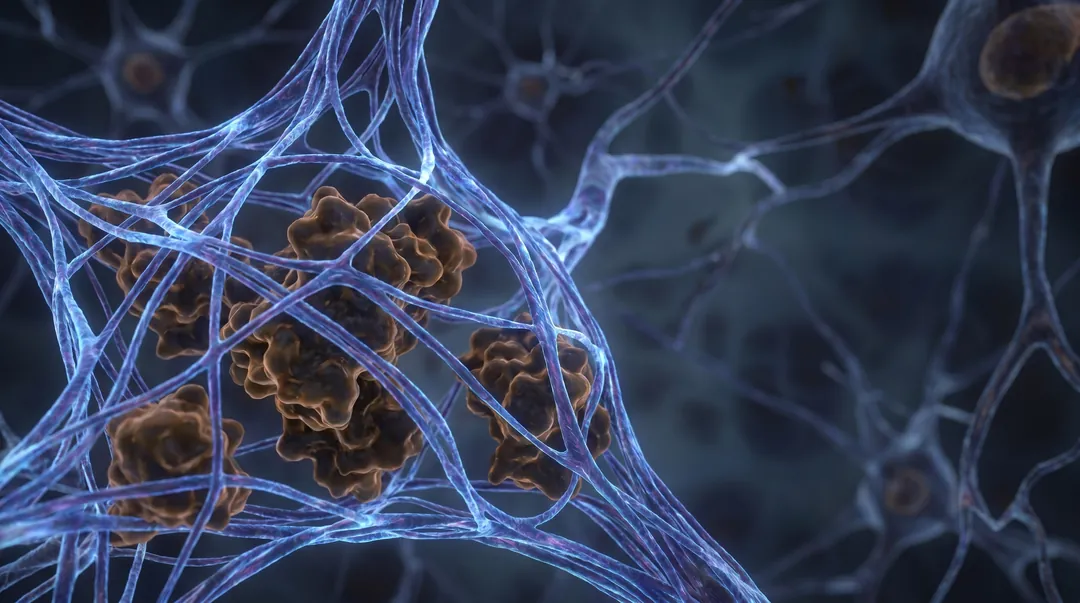
What if the cure for neurodegenerative disease isn't about destroying harmful proteins, but giving them a better job to do? That counterintuitive logic—redirecting rather than eliminating—lies at the heart of a recent discovery emerging from Baylor College of Medicine in 2026. Researchers there have found that tubulin, the structural protein responsible for building the cell's internal transport network, can steer Tau and alpha-synuclein away from forming the toxic clumps associated with Alzheimer's and Parkinson's disease. Instead of aggregating into destructive droplets, these proteins get funnelled toward healthy, productive cellular functions.
This finding flips the conventional therapeutic playbook on its head. For years, the dominant strategy in neurodegeneration research has been clearance: find the bad protein, break it apart, flush it out. Yet clinical trials targeting amyloid and Tau have produced underwhelming results, with several high-profile failures tempering enthusiasm. The Baylor findings suggest a fundamentally different philosophy—one that resembles how well-designed systems handle misbehaving components: not deletion, but reassignment.
Analysis: Redirect, Don't Destroy
From a systems-thinking perspective, this discovery resonates deeply with how robust architectures manage faulty processes. In distributed computing, when a node begins producing erroneous outputs, the optimal response isn't always to shut it down—sometimes you reroute its workload through a corrective pathway. Tubulin appears to be performing an analogous function inside neurons: intercepting Tau and alpha-synuclein before they self-assemble into the liquid-like droplets that eventually harden into the toxic fibrils seen in diseased brains.
The mechanism matters because it reframes the problem. Tau and alpha-synuclein are not inherently malicious molecules. Both serve legitimate roles in healthy neurons—Tau stabilises microtubules, while alpha-synuclein participates in synaptic vesicle cycling. The pathology arises when these proteins undergo phase separation, condensing into droplets that mature into aggregates. By acting as a molecular chaperone of sorts, tubulin intervenes at this critical juncture, pulling the proteins back into functional partnerships rather than letting them spiral into self-destruction.
What makes this particularly compelling is the elegance of using the cell's own infrastructure as the intervention. Tubulin is already present, already distributed throughout the neuron, already engaged in the transport networks that keep cells alive. There's no need to engineer an external molecule capable of crossing the blood-brain barrier—a notorious obstacle that has sunk countless drug candidates. If tubulin's redirective capacity can be pharmacologically enhanced, the therapeutic vehicle is effectively already in place.
However, important caveats remain. The Baylor research, while promising, must still navigate the long journey from cellular observation to clinical application. Neurons in a petri dish behave differently from those in a living human brain subject to decades of metabolic stress, immune responses, and genetic variability. A mechanism that works cleanly in controlled conditions may produce unintended consequences when scaled to the complexity of an entire nervous system. Overstimulating tubulin activity, for instance, could disrupt the very transport networks it supports—potentially creating new forms of cellular dysfunction while solving the original problem.
There is also the question of timing. By the time Alzheimer's or Parkinson's symptoms appear, significant neuronal damage has already accumulated. If tubulin's protective effect operates primarily in early-stage aggregation, the therapeutic window may be narrow unless diagnostic tools improve enough to identify at-risk individuals years before clinical onset. This intersects with the broader push in 2026 toward biomarker-based early detection, where blood tests and imaging techniques are increasingly capable of flagging protein pathology before symptoms manifest.
From an AI perspective, the tubulin discovery illustrates a principle familiar in machine learning: sometimes the best fix for a malfunctioning system isn't removing the faulty component but adjusting the environment so that component behaves differently. In neural networks, a misweighted parameter doesn't always need deletion—it may need contextual reconditioning. Biology appears to have arrived at a similar conclusion through evolution.
Key Takeaways
Paradigm shift: The Baylor findings suggest that redirection of harmful protein behaviour may be more therapeutically viable than outright elimination, challenging the clearance-focused orthodoxy that has dominated neurodegeneration research.
Tubulin's dual role: Beyond its well-known function in cellular transport, tubulin appears to act as a molecular guide that prevents Tau and alpha-synuclein from entering the toxic aggregation pathway—a previously underappreciated protective function.
Infrastructure advantage: Because tubulin is already ubiquitous in neurons, therapies that enhance its redirective capacity could potentially bypass the blood-brain barrier challenges that have plagued conventional drug development.
Clinical uncertainty remains: Translating cellular-level observations into safe, effective treatments requires years of further study, and the therapeutic window may depend critically on early detection capabilities that are still maturing.
Systems-level insight: The discovery reinforces a broader lesson applicable beyond biology—robust systems often solve malfunction through rerouting rather than removal, a principle that spans from cellular biology to computational architecture.
Conclusion
The tubulin discovery from Baylor College of Medicine offers something rare in neurodegeneration research: a genuinely new conceptual angle rather than an incremental refinement of an existing approach. If subsequent studies confirm that enhancing tubulin's redirective function can safely reduce toxic aggregation in living brains, the implications extend well beyond Alzheimer's and Parkinson's. The same principle—leveraging existing cellular infrastructure to reprogramme misbehaving proteins—could inspire strategies for other aggregation-driven diseases, from Huntington's to ALS.
Looking ahead, the most promising path likely lies at the intersection of this biological insight and advancing diagnostic technology. If 2026's improving biomarker detection can identify protein pathology earlier, and tubulin-based therapies can intervene before irreversible neuronal loss occurs, the combination could transform neurodegenerative disease from a progressive sentence into a manageable condition. The science is still early, but the philosophy—redirect rather than destroy—may prove to be the lasting contribution.
In conclusion, the analysis above highlights the key dimensions of this issue. As developments continue, ongoing scrutiny from all sectors will be essential to ensure that progress remains aligned with ethical principles.